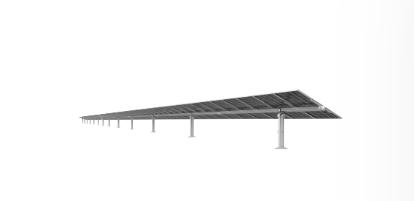
Large-scale solar installations face significant mechanical stresses when high-velocity wind flows across expansive PV module surfaces. As wind velocity crosses critical velocity thresholds, non-linear aerodynamic forces generate vortex shedding along the trailing edge of the module table. Under certain aeroelastic conditions, these forces can contribute to self-excited torsional oscillations, increasing fatigue demands on structural components. Partnering with a reliable global solar tracker manufacturer helps project developers mitigate these dynamic aerodynamic forces through optimized mechanical engineering. Structural configurations designed by industry experts like Antaisolar address these complex aeroelastic phenomena to maintain mechanical stability across utility installations.
Torsional flutter occurs when structural dampening falls below the aerodynamic energy transferred into the mounting system by turbulent wind vectors. When module tables increase in size to accommodate higher-power photovoltaic modules, the natural torsional frequency of traditional single-axis structures decreases markedly. Lower natural frequencies render the system highly susceptible to resonant amplification under moderate to severe wind gusts. If not properly controlled, repeated dynamic twisting can contribute to bolt loosening, torque tube fatigue, and excessive deformation over time.
Structural Vulnerabilities of Traditional Single-Point Actuation
Traditional solar tracking systems often rely on a single slew drive or linear actuator positioned centrally along a long torque tube assembly. While single-point actuation can simplify the drive architecture, longer tracker rows require careful control of torsional stiffness and structural support. These extended spans exhibit reduced rotational stiffness, creating leverage points where wind uplift forces can easily twist the framework out of axial alignment.
During high-wind events, dynamic wind forces create differential torsional moments along the length of the racking torque tube. Because single-point drive structures concentrate rotational restraint solely at the center, outer sections remain free to oscillate during violent wind shears. This localized twisting motion rapidly accelerates wear on drive gear teeth, mounting brackets, and structural fasteners. Over time, recurring angular displacement reduces tracking accuracy, increases maintenance interventions, and creates systemic operational risks for utility-scale solar farms.
Operational Principles of Multi-Point Drive Mechanical Architecture
Multi-point drive configurations fundamentally change structural load distribution by placing multiple synchronized actuation points or mechanical locks along the entire length of the torque tube. Distributing rotational restraint across several connection nodes increases torsional stiffness compared to single-point designs. This structural architecture can increase system stiffness and shift its dynamic response, helping engineers manage potential resonance risks under site-specific wind conditions. A global solar tracker manufacturer utilizes these advanced structural principles to protect multi-megawatt assets against severe weather events.
By securing the structural frame at strategic points along the axis, multi-point architectures reduce unbraced span lengths between drive points. This configuration minimizes angular deflection when asymmetric dynamic loads strike the module surface. The Antaisolar AT-Spark tracking system uses a multi-point drive solution to distribute torsional forces more evenly along the torque tube. The physical constraint provided by multiple drive units prevents the onset of self-sustaining torsional oscillations before damaging vibration amplitudes develop.
Advanced Dampening Systems and Dynamic Load Distribution
Integrating mechanical dampers alongside multi-point drive hardware provides critical dissipation of kinetic energy generated by atmospheric turbulence.
Proper distribution of dynamic loads prevents concentrated stress points from forming near drive assemblies or foundation pylons. When wind loads act on a solar array, multi-point drive configurations can help distribute torsional forces more evenly along the tracker structure and into its supports. More balanced load distribution can reduce localized stress concentrations and support long-term structural durability.
Algorithmic Angle Optimization Under Dynamic Gust Conditions
Beyond physical structural hardware, intelligent control systems assist in defending tracker arrays against aerodynamic instability. Automated monitoring systems evaluate real-time wind speed, directional turbulence, and structural strain data to adjust operational stow angles preemptively. When wind speeds approach pre-determined safety thresholds, control algorithms rapidly command drive motors to position module tables into aerodynamic defense angles. Selecting an experienced global solar tracker manufacturer provides access to sophisticated control software optimized for extreme site conditions.
Smart tracking controls balance energy yield objectives against structural preservation parameters throughout daily operations. Modern monitoring platforms, including the SmartTrail algorithm, calculate optimal tracking angles while continuously analyzing dynamic wind patterns across the installation area. Utilizing precise sensor feedback allows intelligent control systems to initiate dynamic stow routines before hazardous resonant flutter develops, safeguarding long-term asset productivity.
Field Validation and Long-Term Structural Yield Preservation
Validating multi-point drive performance requires extensive wind tunnel testing, computational fluid dynamics simulation, and real-world field verification. Full-scale physical models undergo comprehensive testing in boundary layer wind tunnels to map aeroelastic behavior under variable wind angles and turbulent profiles. These empirical tests verify that structural components maintain torsional rigidity across maximum design wind velocities.
Preserving structural integrity directly correlates with maintaining long-term energy yields and minimizing lifetime operational expenditure for project owners. Structural frameworks built with high structural stability prevent module micro-cracking caused by cyclic mechanical flexing during dynamic wind events. Deploying verified mechanical designs gives EPC procurement teams and project developers confidence that utility-scale assets will maintain full operational availability throughout their operational design life.
Large-scale solar installations face significant mechanical stresses when high-velocity wind flows across expansive PV module surfaces. As wind velocity crosses critical velocity thresholds, non-linear aerodynamic forces generate vortex shedding along the trailing edge of the module table. Under certain aeroelastic conditions, these forces can contribute to self-excited torsional oscillations, increasing fatigue demands on structural components. Partnering with a reliable global solar tracker manufacturer helps project developers mitigate these dynamic aerodynamic forces through optimized mechanical engineering. Structural configurations designed by industry experts like Antaisolar address these complex aeroelastic phenomena to maintain mechanical stability across utility installations.
Torsional flutter occurs when structural dampening falls below the aerodynamic energy transferred into the mounting system by turbulent wind vectors. When module tables increase in size to accommodate higher-power photovoltaic modules, the natural torsional frequency of traditional single-axis structures decreases markedly. Lower natural frequencies render the system highly susceptible to resonant amplification under moderate to severe wind gusts. If not properly controlled, repeated dynamic twisting can contribute to bolt loosening, torque tube fatigue, and excessive deformation over time.
Structural Vulnerabilities of Traditional Single-Point Actuation
Traditional solar tracking systems often rely on a single slew drive or linear actuator positioned centrally along a long torque tube assembly. While single-point actuation can simplify the drive architecture, longer tracker rows require careful control of torsional stiffness and structural support. These extended spans exhibit reduced rotational stiffness, creating leverage points where wind uplift forces can easily twist the framework out of axial alignment.
During high-wind events, dynamic wind forces create differential torsional moments along the length of the racking torque tube. Because single-point drive structures concentrate rotational restraint solely at the center, outer sections remain free to oscillate during violent wind shears. This localized twisting motion rapidly accelerates wear on drive gear teeth, mounting brackets, and structural fasteners. Over time, recurring angular displacement reduces tracking accuracy, increases maintenance interventions, and creates systemic operational risks for utility-scale solar farms.
Operational Principles of Multi-Point Drive Mechanical Architecture
Multi-point drive configurations fundamentally change structural load distribution by placing multiple synchronized actuation points or mechanical locks along the entire length of the torque tube. Distributing rotational restraint across several connection nodes increases torsional stiffness compared to single-point designs. This structural architecture can increase system stiffness and shift its dynamic response, helping engineers manage potential resonance risks under site-specific wind conditions. A global solar tracker manufacturer utilizes these advanced structural principles to protect multi-megawatt assets against severe weather events.
By securing the structural frame at strategic points along the axis, multi-point architectures reduce unbraced span lengths between drive points. This configuration minimizes angular deflection when asymmetric dynamic loads strike the module surface. The Antaisolar AT-Spark tracking system uses a multi-point drive solution to distribute torsional forces more evenly along the torque tube. The physical constraint provided by multiple drive units prevents the onset of self-sustaining torsional oscillations before damaging vibration amplitudes develop.
Advanced Dampening Systems and Dynamic Load Distribution
Integrating mechanical dampers alongside multi-point drive hardware provides critical dissipation of kinetic energy generated by atmospheric turbulence.
Proper distribution of dynamic loads prevents concentrated stress points from forming near drive assemblies or foundation pylons. When wind loads act on a solar array, multi-point drive configurations can help distribute torsional forces more evenly along the tracker structure and into its supports. More balanced load distribution can reduce localized stress concentrations and support long-term structural durability.
Algorithmic Angle Optimization Under Dynamic Gust Conditions
Beyond physical structural hardware, intelligent control systems assist in defending tracker arrays against aerodynamic instability. Automated monitoring systems evaluate real-time wind speed, directional turbulence, and structural strain data to adjust operational stow angles preemptively. When wind speeds approach pre-determined safety thresholds, control algorithms rapidly command drive motors to position module tables into aerodynamic defense angles. Selecting an experienced global solar tracker manufacturer provides access to sophisticated control software optimized for extreme site conditions.
Smart tracking controls balance energy yield objectives against structural preservation parameters throughout daily operations. Modern monitoring platforms, including the SmartTrail algorithm, calculate optimal tracking angles while continuously analyzing dynamic wind patterns across the installation area. Utilizing precise sensor feedback allows intelligent control systems to initiate dynamic stow routines before hazardous resonant flutter develops, safeguarding long-term asset productivity.
Field Validation and Long-Term Structural Yield Preservation
Validating multi-point drive performance requires extensive wind tunnel testing, computational fluid dynamics simulation, and real-world field verification. Full-scale physical models undergo comprehensive testing in boundary layer wind tunnels to map aeroelastic behavior under variable wind angles and turbulent profiles. These empirical tests verify that structural components maintain torsional rigidity across maximum design wind velocities.
Preserving structural integrity directly correlates with maintaining long-term energy yields and minimizing lifetime operational expenditure for project owners. Structural frameworks built with high structural stability prevent module micro-cracking caused by cyclic mechanical flexing during dynamic wind events. Deploying verified mechanical designs gives EPC procurement teams and project developers confidence that utility-scale assets will maintain full operational availability throughout their operational design life.