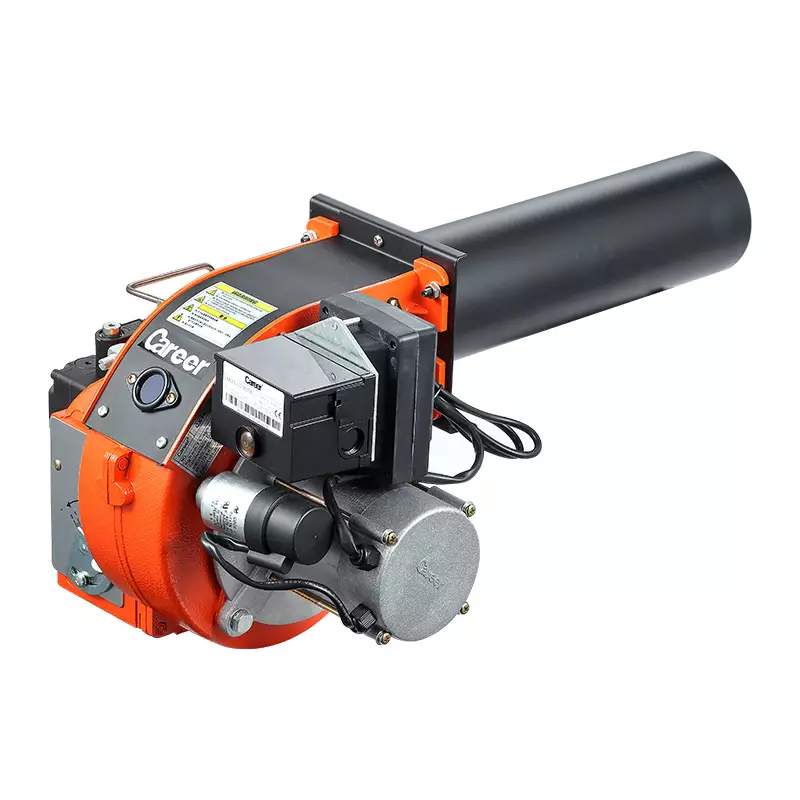
Fuel viscosity is a direct operating variable in liquid-fuel combustion. A fuel oil burner depends on proper fuel conditioning. If oil reaches the atomizer too thick, the spray can become coarser, flow can shift, ignition can become less reliable, and the flame may move away from its intended shape. If oil is overheated, however, vaporization in the fuel system can create another set of problems. The practical objective is not simply “hotter fuel,” but the viscosity required by the burner and atomization method.
For operators selecting or tuning an oil-fired system, viscosity should be treated as part of the fuel-conditioning specification. Temperature, pump performance, nozzle design, fuel pressure, and combustion-air adjustment interact with it. Career Burner’s oil-burner range covers light oils such as diesel, kerosene, and Bio 10 oil, making viscosity management relevant where fuel conditions change.
Why viscosity changes the spray
Viscosity describes a liquid’s resistance to flow. In a pressure-atomizing burner, pressurized oil passes through small passages and a nozzle orifice, where pressure energy is converted into velocity and the liquid is broken into droplets. Higher viscosity resists that breakup.
Larger droplets have less surface area relative to their volume and generally take longer to evaporate. Poor atomization can delay ignition, alter flame pattern, and increase the chance that fuel reaches surfaces before completing combustion. Technical references also note that increasing viscosity can increase nozzle flow under certain pressure-atomizing conditions, so delivery cannot be judged from viscosity alone.
What happens when fuel is too viscous?
Excessive viscosity can make pumping and atomization more difficult, particularly with heavier fuel grades. Conventional pressure nozzles are relatively ineffective with highly viscous residual oils unless the fuel is heated to reduce viscosity. The required temperature depends on the fuel and atomizer rather than a universal setting.
At the burner, symptoms can include unstable flame shape, difficult light-off, incomplete combustion, or changing heat output. Operators may then adjust air or pressure even though the underlying problem is fuel conditioning.
A commercial or industrial fuel oil burner therefore needs a supply that remains within the atomizer’s intended viscosity range. Manufacturer data should determine the target rather than a generic temperature rule. Industry guidance emphasizes using the proper oil temperature for pumping and atomization and warns that both excessively high and low preheat temperatures can produce poor combustion.
Why heating the oil is not a simple fix
Preheating is commonly used to lower viscosity, but excessive heating can be counterproductive. API guidance notes that lowering viscosity generally improves atomization for viscous fuels, while warning against heating fuel enough to cause vaporization in the oil gun or supply system.
The critical control point is viscosity at the atomizer. Oil can cool through piping, filters, valves, or pressure-regulating equipment, while excessive heating near the burner can create a different fuel condition.
For an industrial heating oil burner, temperature control is therefore part of combustion control. Where fuel characteristics vary, checking viscosity and temperature near the burner can provide better information than assuming a fixed heater setting. ASME guidance recognizes that heavy fuels may require heating to reach an appropriate viscosity and that actual fuel characteristics can vary enough to justify periodic checks.
How viscosity affects burner tuning
Combustion tuning should begin with the fuel condition for which the burner is designed. Once the required viscosity is established, technicians can evaluate fuel pressure, nozzle selection, atomization quality, combustion air, ignition, and flame shape as a connected system.
Changing one variable can hide another. Raising pressure may influence droplet formation, but it does not automatically correct fuel outside the nozzle’s intended viscosity range.
Career Burner offers light-oil systems across a broad output range, with single-stage and two-stage control options and other regulation configurations. The relevant question is whether the burner, nozzle, fuel supply, and controls are matched to the actual fuel.
A practical viscosity check before troubleshooting
When flame performance changes unexpectedly, technicians can first compare current fuel temperature and viscosity with the manufacturer’s requirements. Next, filters, pumps, heaters, and piping should be checked for restrictions or abnormal temperature loss. Nozzle condition and fuel pressure should then be verified before combustion-air adjustments are made.
Fuel changes deserve attention because different grades or blends can have different viscosity-temperature behavior. For Career Burner systems, fuel should be clean and properly filtered, with fuel temperature, pressure, and the air-to-fuel ratio set according to the manufacturer’s specifications.
Stable viscosity is the real operating target
Fuel oil viscosity affects burner performance because it changes how reliably liquid can be delivered and atomized. Excessive viscosity can produce larger droplets and poorer spray development; excessive preheating can introduce vaporization or other fuel-system concerns.
The sound operating strategy is to maintain the viscosity specified for the particular atomizer and verify that condition where combustion actually begins. For a heating oil burner using heavier oils, controlled preheating and closer monitoring may be necessary. For light-oil systems, stable fuel quality, filtration, temperature, and pressure remain central to repeatable operation.
These considerations also apply when selecting a burner from Career Burner’s oil-burner portfolio. The correct viscosity target is not an isolated number; it is the condition that allows the atomizer to produce a stable spray, support reliable ignition, and deliver consistent heat release.