Tissue dissociation is a crucial process in cellular biology that enables scientists to isolate individual cells from complex tissues. The method chosen for dissociation—whether mechanical or enzymatic—has a significant impact on cell viability and the overall success of experiments. This article compares these two approaches, focusing on how they differ in their mechanisms and their suitability for various research applications, particularly in conjunction with a tissue dissociator like the BP LabLine.
Understanding Mechanical Dissociation for Single-Cell Suspension
Mechanical dissociation relies on physical forces to break up tissue into smaller fragments, creating a single-cell suspension. This method is ideal for tissues that are more fibrous or tough, such as mouse adipose tissue or brain tumor samples. Mechanical dissociation is generally faster than enzymatic methods, often completed within 15-30 minutes, as seen with products like the BP LabLine tissue dissociator. This process maintains high cell viability while ensuring minimal damage to cellular structures.
Enzymatic Dissociation: A Biochemical Approach
In contrast, enzymatic dissociation uses enzymes to break down the extracellular matrix that holds cells together. Enzymes like collagenase or trypsin are often employed to separate cells more delicately, which can be beneficial for more sensitive tissue types. However, enzymatic dissociators can sometimes lead to reduced cell viability if not carefully monitored. For example, while primary cells from tissues like spleen or liver can be efficiently dissociated using enzymes, there’s a risk of damaging fragile cells, particularly with longer exposure times.
The Role of the BP LabLine in Tissue Dissociation
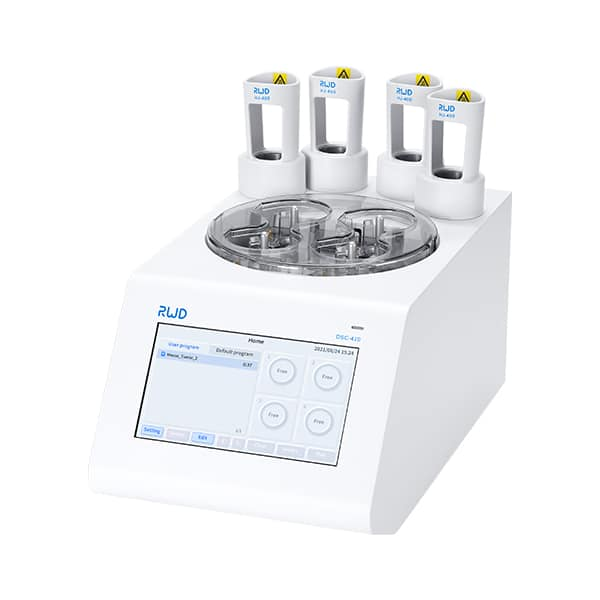
The BP LabLine tissue dissociator offers a versatile solution that can integrate both mechanical and enzymatic approaches. With its four independent working channels, this device can process multiple samples simultaneously, making it an invaluable tool for researchers. Whether working with human tumor samples, mouse neural tissue, or spleen, the BP LabLine ensures high repeatability and consistency, regardless of whether mechanical or enzymatic dissociation is chosen.
Conclusion
Both mechanical and enzymatic dissociation methods have their respective strengths and limitations. Mechanical dissociation is faster and more effective for tougher tissues, while enzymatic dissociation provides a gentler approach for sensitive samples. The BP LabLine tissue dissociator facilitates efficient and reliable dissociation, whether mechanical or enzymatic, to meet the demands of various research applications. With its ability to dissociate tissues such as tumors, spleens, and mouse adipose tissues with high cell viability, it remains an essential tool in cell biology research.