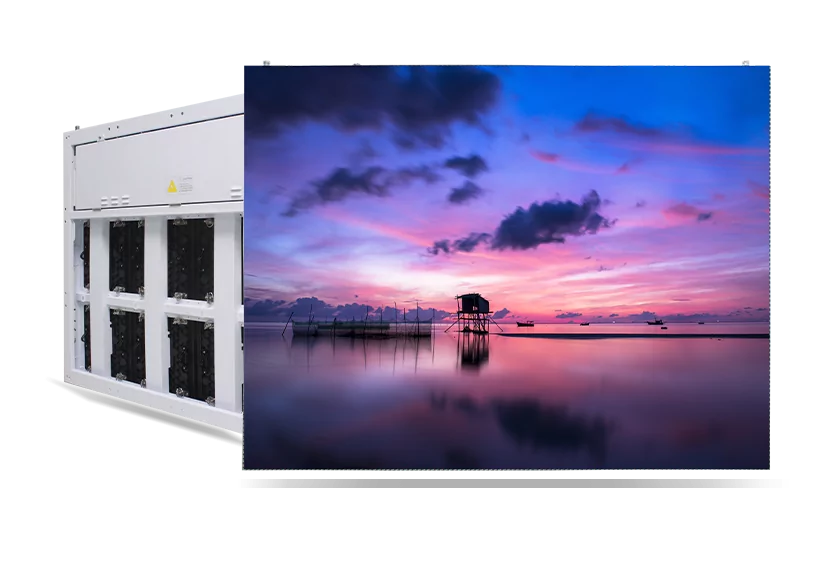
Tender documents work best when technical requirements are measurable, relevant, and open enough to support genuine competition. Image quality, cabinet construction, power characteristics, reliability, and installation conditions deserve clear definitions rather than vague marketing language. A commercial LED display specification should describe the required outcome and measurable parameters while avoiding unnecessary restrictions that favor one supplier.
Define Performance Requirements
Start with viewing distance, installation environment, pixel pitch, brightness range, refresh rate, color performance, and screen dimensions. Requirements should reflect the actual application instead of using arbitrary figures. Image uniformity and seamless cabinet integration may also matter where the display forms a large continuous visual surface.
Address Power And Reliability
Power consumption can be stated through measurable operating conditions, allowing bids to be compared consistently. Energy efficiency becomes particularly relevant for displays operating for long periods. The tender can also request information about power redundancy, thermal management, operating temperature, and maintenance access.
Ledman identifies commercial LED screen features including seamless splicing, low power consumption, stable operation, and high-quality display effects. These characteristics illustrate useful categories for technical evaluation without requiring the tender to prescribe one proprietary design.
Keep Quality Criteria Objective
Quality requirements should be supported by testing methods, documentation, inspection procedures, and acceptance criteria. Instead of writing subjective terms such as “excellent picture,” procurement teams can specify measurable image and structural requirements. Warranty scope, spare-parts availability, training, and after-sales response can be listed separately from core display specifications.
Clear evaluation categories also help bidders understand how technical compliance will be assessed. This approach gives a commercial LED display tender greater transparency while preserving room for technically different solutions.
Conclusion
Well-written specifications balance precision with flexibility. Performance parameters define what the project needs, while objective acceptance criteria provide a consistent basis for comparing proposals. Procurement teams can use this framework to evaluate quality without unnecessarily narrowing the supplier pool. Ledman’s experience with professional display solutions offers one reference point when developing requirements for a commercial LED screen, particularly where seamless construction, power efficiency, and operational stability matter.