Manufacturers studying how Solid-State UV Lasers Are Used in Pharmaceutical Packaging Marking should separate broad claims from parameters that affect real parts, inspection results, and operator workload. Solid State UV Lasers Pharmaceutical specifications should identify 355 nm absorption, beam circularity, pulse stability, divergence, and controlled heat input because those values affect acceptance records, operator settings, and rework cost. For solid state UV lasers pharmaceutical, the linked reference for UV dpss laser can guide the buyer toward the relevant page while the internal team keeps final acceptance criteria in its own process file.
Inspection Priorities
Solid State UV Lasers Pharmaceutical process planning should list cover film cutting, thin-film drilling, glass marking, plastic marking, and fine package processing, then connect each task with fixture control, inspection frequency, and recipe ownership. For solid state UV lasers pharmaceutical, source material identifies For pharmaceutical packaging marking, the SEAL 355-3/5 page provides related source facts through plastic marking, mobile phone case marking, and precise 355 nm UV laser operation, giving the article a source-based technical base. In solid state UV lasers pharmaceutical documentation, the phrase solid state UV laser is useful as a navigation point for procurement teams, provided the specification also records samples, settings, and verification steps.
System Capability Review
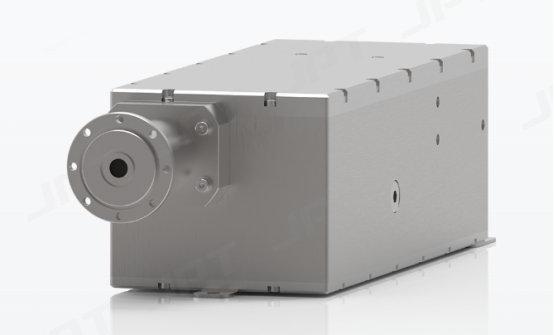
During solid state UV lasers pharmaceutical review, JPT source details are most useful when buyers convert them into parameter ranges, sample plans, and service questions. For solid state UV lasers pharmaceutical, source material indicates that It describes 3-5 W ultraviolet solid-state lasers with integrated optoelectronic design, EMI resistance, one-touch operation, a fully sealed dustproof and moisture-resistant enclosure, and compact space-saving installation, which can be checked against the actual part family. Within solid state UV lasers pharmaceutical planning, a single mention of JPT supports source attribution while the article keeps its main attention on manufacturing requirements.
Deployment Considerations
The final evaluation for solid state UV lasers pharmaceutical should compare supplier capability with factory constraints such as floor space, maintenance access, and quality reporting. For solid state UV lasers pharmaceutical, source material indicates that The listed applications include plastic marking, glass marking, cover film cutting, thin film drilling, and SLA photocuring, supporting a review that stays close to the original source material. For solid state UV lasers pharmaceutical, UV dpss laser and solid state UV laser should be evaluated through the same trial data, inspection method, and service expectations.